Author

admin

Browsing

The head of the Justice Department’s antitrust unit said Thursday she is leaving the role, effective immediately, at a critical moment for corporate mergers in America.

Gail Slater, the assistant attorney general in charge of the Antitrust Division, wrote on X: ‘It is with great sadness and abiding hope that I leave my role as AAG for Antitrust today.’

Slater continued, ‘It was indeed the honor of a lifetime to serve in this role. Huge thanks to all who supported me this past year, most especially the men and women of’ the Department.

The White House referred questions to the Justice Department.

Attorney General Pam Bondi said in a statement, “On behalf of the Department of Justice, we thank Gail Slater for her service to the Antitrust Division which works to protect consumers, promote affordability, and expand economic opportunity.”

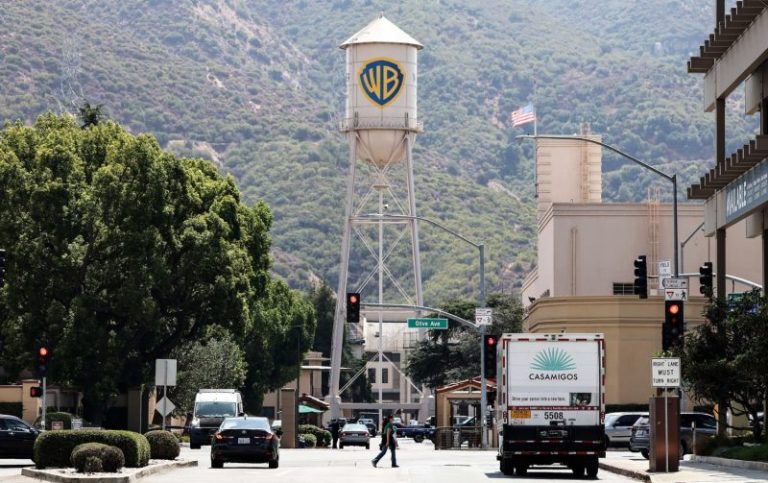
Slater is leaving just as media giants Netflix and Paramount Skydance battle for control of Warner Bros. Discovery.

President Donald Trump had said he was going to get involved in reviewing whichever Warner Bros. deal proceeds, an uncommon occurrence in antitrust matters.

But in an interview with NBC News, Trump slightly changed his tune. ‘I’ve been called by both sides, it’s the two sides, but I’ve decided I shouldn’t be involved,’ he said.

‘The Justice Department will handle it.’

Trump has met with executives from both of Warner Bros.’ bidders.

The Justice Department will also head to court in weeks in a bid to challenge concert venue manager Live Nation’s ownership of Ticketmaster.

Shares of Live Nation jumped as much as 5.8% after Slater announced her departure. By 1 p.m. ET, the rally had abated to around 2.5%.

When the Senate confirmed Slater, 78 senators from both sides of the aisle voted in her favor. Only 19 opposed her confirmation.

This week, her deputy in the Antitrust Division also departed.

Mark Hamer, deputy assistant attorney general for the Antitrust Division, wrote on LinkedIn, ‘Decided the time is right for me to return to private practice.’ He praised Slater as a ‘leader of exceptional wisdom, strength and integrity.’

This post appeared first on NBC NEWS

Warner Bros. Discovery said Tuesday that it was reopening talks with Paramount Skydance, giving the studio a week to rival Netflix in its bid to take over the streaming and cable giant.

In a statement, Warner Bros. Discovery said it had rejected the latest $30-a-share offer from Paramount but would give the company until Monday ‘to make its best and final offer.’

It also said a ‘senior representative’ of Paramount had indicated that the CBS owner would be willing to meet an even higher price, $31 a share, seemingly enticing the board back to the table.

At the same time, Warner Bros. is still recommending its shareholders vote at a special meeting March 20 to approve the $82.7 billion deal it reached in December to sell its streaming service, studio and HBO cable channel to Netflix.

Paramount is seeking to buy the entirety of Warner Bros. Discovery.

‘Every step of the way, we have provided [Paramount Skydance] with clear direction on the deficiencies in their offers and opportunities to address them,’ David Zaslav, CEO of Warner Bros. Discovery, said in the statement.

In a letter to the Paramount board — chaired by David Ellison, also the company’s CEO and controlling shareholder — Warner Bros. said that while Paramount had indicated it would address ‘unfavorable terms and conditions,’ these had not yet been removed from the proposed merger agreement.

Warner Bros. has repeatedly rejected previous bids from Paramount, citing the ‘insufficient value’ offered.

In a separate statement, Netflix hit out at what it called Paramount’s ‘antics.’

‘Throughout the robust and highly competitive strategic review process, Netflix has consistently taken a constructive, responsive approach with WBD, in stark contrast to Paramount Skydance,’ it said.

Netflix said that it was ‘confident that our transaction provides superior value and certainty’ but also recognized ‘the ongoing distraction for WBD stockholders and the broader entertainment industry caused by’ Paramount. The company said it granted Warner Bros. the one-week window to reopen talks with Paramount to ‘fully and finally resolve this matter.’

Netflix also took aim at the regulatory process required for either company to complete a takeover.

It said that Paramount has ‘repeatedly mischaracterized the regulatory review process by suggesting its proposal will sail through.’

‘WBD stockholders should not be misled into thinking that PSKY has an easier or faster path to regulatory approval — it does not,’ Netflix said.

In a statement, Paramount Skydance reiterated its existing offer to Warner Bros. Discovery of $30 per share. The company did not indicate if it would submit a higher bid.

Paramount called the one-week negotiating window ‘unusual’ but said it ‘is nonetheless prepared to engage in good faith and constructive discussions.’

The Ellison-backed media giant also said it would continue advocating against the Netflix deal and submit a slate of directors for Warner Bros.’ board at the upcoming shareholder meeting, as it previously planned to.

President Donald Trump, whose administration approved Ellison’s takeover of Paramount last year, said early in the bidding process he would be involved in approving a deal with Warner Bros.

But earlier this month, Trump changed his tune. ‘I’ve been called by both sides, it’s the two sides, but I’ve decided I shouldn’t be involved,’ he told ‘NBC Nightly News’ anchor Tom Llamas.

Trump still hinted that one company looked problematic to him. ‘I mean, there’s a theory that one of the companies is too big and it shouldn’t be allowed to do it,’ he said.

‘They’re beating the hell out of each other and there’ll be a winner,’ Trump said.

Warner Bros. has an archive of storied movies, as well as a diverse portfolio of brands including CNN and HBO.

The bidding war for the media empire comes at a pivotal time for the entertainment industry, with traditional broadcasters and studios facing serious challenges from digital newcomers Netflix, Apple and Amazon.

Since Netflix announced its deal to buy parts of Warner Bros. Discovery, its shares have tumbled nearly 25%.

This post appeared first on NBC NEWS

The Commodity Futures Trading Commission (CFTC) is stepping in to stop what it calls an “onslaught” of state-level regulation of prediction markets.

CFTC Chairman Michael Selig said Tuesday in a video posted on X that the agency has filed a “friend of the court brief” in support of Crypto.com in its escalating legal battle with regulators in Nevada.

The move is significant because it marks the first time under Selig that the CFTC has taken sides in what is shaping up to be an epic fight between regulators and prediction markets, platforms that allow users to trade contracts tied to a wide range of events, from local elections to the Super Bowl.

By intervening, Selig’s CFTC is effectively arguing that prediction markets are federally regulated and not subject to state-level gambling laws.

“Over the past year, American prediction markets have been hit with an onslaught of state-led litigation,” Selig said in the video.

“The CFTC will no longer sit idly by while overzealous state governments undermine the agency’s exclusive jurisdiction over these markets by seeking to establish statewide prohibitions on these exciting products,’ said Selig.

The debate over how the platforms should be regulated comes as they explode in popularity. Kalshi said Super Bowl 60 generated more than $1 billion in total trading volume — a 2,700% increase from last year.

It’s a fight with broad implications and high stakes. Over the past year, several states including Massachusetts and Nevada have moved to restrict prediction markets, filing lawsuits, issuing cease-and-desist letters and arguing that the platforms amount to unlicensed gambling.

Utah’s Republican governor, Spencer Cox, said in a post on X Tuesday that he will use “every resource” within his disposal to “beat” Selig in court.

“These prediction markets you are breathlessly defending are gambling—pure and simple,” he said. “They are destroying the lives of families and countless Americans, especially young men. They have no place in Utah.”

Meanwhile, Cox’s fellow Republican, Sen. Bernie Moreno of Ohio, issued his support of Selig’s announcement on X. “Clear lines of delineation and clarity on regulations is essential for American led innovation,’ he said.

Selig’s move comes days after a group of Democratic senators led by Nevada’s Catherine Cortez Masto sent the chairman a letter urging the CFTC to ‘abstain from intervening in pending litigation involving contracts tied to sports, war, or other prohibited events.’

As states attempt to rein in these fast-growing platforms, the question is no longer simply whether these products amount to gambling. It’s who gets to decide that question.

Industry advocates argue that the platforms aren’t gaming, which is traditionally regulated by states. Instead, they claim the prediction markets are financial exchanges that fall under the CFTC’s purview, where users trade contracts with one another. and don’t bet against a “house.” The exchanges don’t set odds or take the opposite side of trades. Instead, they collect transaction fees, similar to a brokerage.

In the video, Selig said prediction markets allow Americans to “hedge commercial risks like increases in temperature and energy price spikes,” and they act as “an important check on our news media and our information screens.”

He ended the video with a warning directed at the state attorneys general who are on the front lines of the legal fights to regulate prediction markets: “To those who seek to challenge our authority in this space, let me be clear: We will see you in court.”

This post appeared first on NBC NEWS

Los Angeles County filed a civil lawsuit against Roblox, alleging that the platform markets itself as a gaming experience for children but has created a ‘largely unsupervised online world’ that allows adults to mingle with minors with very little oversight.

The lawsuit says that Roblox’s architecture makes it easy for adults to masquerade as children in order to target them.

‘Beneath the bright animation and cheerful branding lies an environment in which child predators can readily locate, contact, and interact with minors through Roblox-enabled features and defaults, and where age-inappropriate sexual content and sexually themed interactions and experiences can be assessed and disseminated through Roblox’s functionality and tools, leaving minors to navigate dangers they do not and cannot understand,’ the lawsuit says.

The suit was filed on Thursday and asks that Roblox be ordered to pay a civil penalty of up to $2,500 for each violation of the Unfair Competition and False Advertising laws. It also asks that Roblox cover the county’s legal fees.

Roblox said in a statement that it disputes the county’s claims ‘and will defend against it vigorously.’

‘Roblox is built with safety at its core, and we continue to evolve and strengthen our protections every day,’ a company spokesperson said. ‘We have advanced safeguards that monitor our platform for harmful content and communications, and users cannot send or receive images via chat, avoiding one of the most prevalent opportunities for misuse seen elsewhere online.’

The company said safety remains a top priority and takes ‘swift action against anyone found to violate our safety rules.’

The lawsuit, however, accuses Roblox of failing to implement safety measures, including age verification, default communications restrictions and effective reporting mechanisms.

‘These fixes are obvious, easy, and long overdue,’ it says.

The county said in its suit that it has had to ‘expend, divert and increase resources to address rising rates of child sexual exploitation, trafficking, abuse and mental health trauma.’

‘By taking actions that increase the costs of law enforcement, child protective services, victim services, mental health counseling, and other public services, Roblox has diverted taxpayer dollars away from other critical public programs and services,’ the suit alleges.

Roblox said in its statement that as of January, it requires all users to undergo a facial age check to use the chat feature, and that chat users are placed into age groups.

Parents are given control over whether their child can access the chat feature, can block specific users and games, and can set screen time limits. The company also said it does not allow users to send images or videos via chat.

‘There is no finish line when it comes to protecting kids, and while no system can be perfect, our commitment to safety never ends,’ Roblox said.

Since its launch in 2006, Roblox has grown to become a massive global success. It has 144.5 million daily active users with over 35 billion engagement hours, its website states.

According to its most recent shareholder letter for Quarter 4, revenue grew 36% year-over-year to $4.9 billion and generated $1.8. billion in operating cash flow in fiscal 2025.

This was due to the addition of about 60 million daily active users from Quarter 4 of 2024 to Quarter 4 of 2025, the letter says.

Over the years, the gaming platform has been at the center of several lawsuits, including one filed last year where a California woman alleged that her teenage son was groomed and coerced to send explicit images on Roblox and Discord. The suit was filed after the boy took his own life in April 2024.

Attorneys for the mother said the boy was targeted by “an adult sex predator” who posed as a child on Roblox. The lawsuit alleged that the conversation between the boy and the man escalated to include “sexual topics and explicit exchanges.” The man eventually encouraged the boy to move the conversation to Discord, demanded that the boy share explicit videos and images, and then threatened to post them, the lawsuit alleged.

Both companies said at the time that it does not comment on legal matters. The case is still pending.

Louisiana Attorney General Liz Murrill also sued the platform last year, alleging that it was “the perfect place for pedophiles” due to its failure to implement strong safety protocols. Roblox denied her claims and said it was committed to working with the prosecutor’s office to keep children safe.

This post appeared first on NBC NEWS

Nevgold Corp. (‘NevGold’ or the ‘Company’) (TSXV:NAU,OTC:NAUFF) (OTCQX:NAUFF) (Frankfurt:5E50) is pleased to announce that the permits have been received and a drill rig is mobilizing to its Limousine Butte Project (the ‘Project’, ‘Limo Butte’) in Nevada. The drilling will test the historical gold heap leach pads for antimony with the objective of advancing the leach pads to a near-term antimony production scenario. This is one of the only near-term, at-surface antimony production scenarios in the United States with a path to potential antimony metal production by 2027. 

NevGold CEO, Brandon Bonifacio, comments: ‘There are very few opportunities like the near-term antimony production potential from the historical gold leach pads at Limo Butte. There is a clear mandate in the United States to find near-term production from a number of Critical Minerals, and we have one of those opportunities which we are rapidly advancing. We are in an advantageous position as we have oxide antimony at surface amendable to leaching at a brownfield mine site in the State of Nevada, which is one of the top mining jurisdictions globally with a systematic permitting regime and strong community support. Our focus is to drill the leach pads to advance to a Mineral Resource Estimate by the beginning of Q2-2026, which will define the grade and quantities of contained antimony that we have on the pads. Once an MRE is delivered, we will be able to evaluate the various development scenarios to extract the antimony from the leach pads, with the objective of reaching antimony metal production by 2027. We have the opportunity to be one of the near-term solutions to the United States building a fully vertically integrated antimony supply chain

Key Highlights

  • Drilling will advance the leach pads to a Mineral Resource Estimate (‘MRE’) by the beginning of Q2-2026 building on the Phase 1 sampling completed (see News Release from January 6, 2026):
    • The MRE is a key step in defining the quantities of antimony that could be processed in the near-term from the historical gold leach pads
    • Drilling will be completed over the coming weeks
    • Certain areas of the leach pads had Phase I sampling results of 0.74% Sb to 0.81% Sb (See Figure 1)
      • 2025 testwork using acid leaching resulted in antimony recoveries of up to 92%
      • Acid Leaching is being reviewed as the preferred metallurgical process for antimony as there is no reliance on downstream processing at third-party smelters; the acid leaching scenario would produce antimony metal at site through a conventional leaching scenario, which has many similarities to Solvent Extraction-Electrowinning (SX/EW) used for oxide copper in the copper industry
      • Antimony recovery has minimal to no impact on gold recovery; the gold in the historical leach pads could also be recovered in the future after antimony processing is completed
    • Antimony is one of the highest priority Critical Minerals due to its strategic importance and military applications; Limo Butte is a brownfield mine site located in the State of Nevada with near-surface, high-grade antimony mineralization
      • Historical leach pads provide opportunity for near-term antimony production
      • A larger commercial gold-antimony opportunity could be advanced and developed in parallel to the historical leach pad opportunity, including drilling, metallurgical testwork, and the preparation of a Mineral Resource Estimate (‘MRE’) at Resurrection Ridge (including high-grade antimony Bullet Zone discovery made in 2025) and Cadillac Valley
      • A staged project development approach offers various potential development scenarios over the next 12-24 months which may achieve near-term production and cash flow
    • 30 holes completed in the current 2025-2026 drill program with 12 holes pending release 

    Limo Butte Planned 2026 Activities / Status Update
    NevGold will continue its active exploration program at Limo Butte including:

    • Evaluating the historical geological database with focus on gold and antimony (completed);
    • Advancing metallurgical testwork (ongoing);
    • Continuing to drill test gold-antimony targets (5,000 meters (30 drillholes) completed, a further 20,000 meters is planned in 2026 focused on the Bullet Zone and Armory Fault discoveries);
    • Advancing the Crushed and Run of Mine (‘ROM’) leach pads to near-term antimony production (Drilling March-2026, MRE beginning of Q2-2026, ongoing metallurgical testwork);
    • Completing initial gold-antimony Mineral Resource Estimate (MRE) (in progress).

    Figure 1 – Historical gold leach pads and summary of Phase 1 pit sampling antimony results released on January 6, 2026. The results show consistent antimony grade throughout both the Crushed and ROM pads. The historically mined leach pads have material at surface that was previously mined and crushed with strong antimony-gold potential. To view image please click here

    Figure 2 – Historical gold leach pads and summary of Phase 1 pit sampling gold results released on January 6, 2026. The results show consistent gold grade throughout both the Crushed and ROM pads. The historically mined leach pads have material at surface that was previously mined and crushed with strong antimony-gold potential. 
    To view image please click here

    Figure 3 – Resurrection Ridge target area with the historically mined Golden Butte pit gold leach pads. 
    To view image please click here

    US Executive Order – Announced March 20, 2025
    The Company is pleased to report the sweeping Executive Order to strengthen American mineral production and reduce U.S. reliance on foreign nations for its mineral supply. Antimony (Sb) has been identified as an important ‘Critical Mineral’ in the United States essential for national security, clean energy, and technology applications, yet limited domestic mine supply currently exists.

    The Executive Order invokes the use of the Defense Production Act as part of a broad United States (‘US’) Government effort to expand domestic minerals production on national security grounds. As it relates to project permitting, the Order states that it will ‘identify priority projects that can be immediately approved or for which permits can be immediately issued, and take all necessary or appropriate actions…to expedite and issue the relevant permits or approvals.’ Furthermore, the Order includes provisions to accelerate access to private and public capital for domestic projects, including the creation of a ‘dedicated mineral and mineral production fund for domestic investments’ under the Development Finance Corporation (‘DFC’).

    This decisive action by the US Government highlights the urgent need to expand domestic minerals output to support supply chain security in the United States. This important Order will help revitalize domestic mineral production by improving the permitting process and providing financial support to qualifying domestic projects.

    Importance of Antimony
    Antimony is considered a ‘Critical Mineral’ by the United States based on the U.S. Geological Survey’s 2022 list (U.S.G.S. (2022)). ‘Critical Minerals’ are metals and non-metals essential to the economy and national security. Antimony is utilized in all manners of military applications, including the manufacturing of armor piercing bullets, night vision goggles, infrared sensors, precision optics, laser sighting, explosive formulations, hardened lead for bullets and shrapnel, ammunition primers, tracer ammunition, nuclear weapons and production, tritium production, flares, military clothing, and communication equipment. Other uses include technology (semi-conductors, circuit boards, electric switches, fluorescent lighting, high quality clear glass and lithium-ion batteries) and clean-energy storage.

    Globally, approximately 90% of the world’s current antimony supply is produced by China, Russia, and Tajikistan. Beginning on September 15, 2024, China, which is responsible for nearly half of all global mined antimony output and dominates global refinement and processing, announced that it will restrict antimony exports. In December-2024, China explicitly restricted antimony exports to the United States citing its dual military and civilian uses, which further exacerbated global supply chain concerns. (Lv, A. and Munroe, T. (2024)) The U.S. Department of Defense (‘DOD’) has designated antimony as a ‘Critical Mineral’ due to its importance in national security, and governments are now prioritizing domestic production to mitigate supply chain disruptions. Projects exploring antimony sources in North America play a key role in addressing these challenges.

    Perpetua Resources Corp. (‘Perpetua’, NASDAQ:PPTA, TSX:PPTA) has the most advanced domestic gold-antimony project in the United States. Perpetua’s project, known as Stibnite, is located in Idaho approximately 130 km northeast of NevGold’s Nutmeg Mountain and Zeus projects. Positive advancements at Stibnite including technical development and permitting has led to US$75 million in Department of Defense (‘DOD’) awards, over $1.8 billion in indicative financing from the Export Import Bank of the United States (‘US EXIM’) (see Perpetua Resources News Release from April 8, 2024) (Perpetua Resources. (2025)), and recent strategic investments of US$180 million from Agnico-Eagle Mines Limited (‘Agnico’) and US$75 million from JPMorganChase’s $1.5 trillion Security and Resiliency Initiative. (see Perpetua Resources News Release from October 27, 2025)

    Figure 4 – Limousine Butte Land Holdings and District Exploration Activity To view image please click here

    ON BEHALF OF THE BOARD

    ‘Signed’

    Brandon Bonifacio, President & CEO

    For further information, please contact Brandon Bonifacio at bbonifacio@nev-gold.com, call 604-337-4997, or visit our website at www.nev-gold.com.

    Sampling Methodology, Quality Control and Quality Assurance
    NevGold QA/QC protocols are followed on the Project and include insertion of duplicate, blank and standard samples in all drill holes. Drill, surface, and pit samples are sent to ISO 17025 certified American Assay Labs in Reno, Nevada. A 30g gold fire assay and multi-elemental analysis ICP-OES method were completed.

    The pit sampling was conducted by Greg French, CPG, the Company’s Vice President, Exploration, who is NevGold’s Qualified Person (‘QP’) under National Instrument 43-101. Mr. French also and reviewed and approved the technical information contained in this news release

    About the Company
    NevGold is an exploration and development company targeting large-scale mineral systems in the proven districts of Nevada and Idaho. NevGold owns a 100% interest in the Limousine Butte and Cedar Wash gold projects in Nevada, and the Nutmeg Mountain gold project and Zeus copper project in Idaho.

    Neither the TSX Venture Exchange nor its Regulation Services Provider (as that term is defined in the policies of the TSX Venture Exchange) accepts responsibility for the adequacy or accuracy of this release.

    Cautionary Note Regarding Forward Looking Statements

    This news release contains forward-looking statements that are based on the Company’s current expectations and estimates. Forward-looking statements are frequently characterized by words such as ‘plan’, ‘expect’, ‘project’, ‘intend’, ‘believe’, ‘anticipate’, ‘estimate’, ‘suggest’, ‘indicate’ and other similar words or statements that certain events or conditions ‘may’ or ‘will’ occur. Forward-looking statements include, but are not limited to, the proposed work programs at Limousine Butte, the exploration potential at Limousine Butte, and the completion of future potential project milestones such as the potential Mineral Resource Estimate (‘MRE’) and reaching potential antimony production. Such forward-looking statements involve known and unknown risks, uncertainties and other factors that could cause actual events or results to differ materially from estimated or anticipated events or results implied or expressed in such forward-looking statements. Such risks include, but are not limited to, general economic, market and business conditions, and the ability to obtain all necessary regulatory approvals. There is some risk that the forward-looking statements will not prove to be accurate, that the management’s assumptions may not be correct or that actual results may differ materially from such forward-looking statements. Accordingly, readers should not place undue reliance on the forward-looking statements. Any forward-looking statement speaks only as of the date on which it is made and, except as may be required by applicable securities laws, the Company disclaims any intent or obligation to update any forward-looking statement, whether as a result of new information, future events or results or otherwise. Forward-looking statements are not guarantees of future performance and accordingly undue reliance should not be put on such statements due to the inherent uncertainty therein.

    References

    Blackmon, D. (2021) Antimony: The Most Important Mineral You Never Heard Of. Article Prepared by Forbes.

    Kurtenbach, E. (2024) China Bans Exports to US of Gallium, Germanium, Antimony in response to Chip Sanctions. Article Prepared by AP News.

    Lv, A. and Munroe, T. (2024) China Bans Export of Critical Minerals to US as Trade Tensions Escalate.  Article Prepared by Reuters.

    Lv, A. and Jackson, L. (2025) China’s Curbs on Exports of Strategic Minerals. Article Prepared by Reuters.

    Perpetua Resources. (2025) Antimony Summary.  Articles and Videos Prepared by Perpetua Resources.

    Sangine, E. (2022) U.S. Geological Survey, Mineral Commodity Summaries, January 2023. Antimony Summary Report prepared by U.S.G.S

    U.S.G.S. (2022) U.S. Geological Survey Releases 2022 List of Critical Minerals. Reported Prepared by U.S.G.S

    News Provided by GlobeNewswire via QuoteMedia

    This post appeared first on investingnews.com

    Cartier Resources Inc. (″ Cartier ″ or the ″ Company ″) (TSXV: ECR,OTC:ECRFF; FSE: 6CA) is pleased to announce the ninth batch of results from the 100,000-m drilling program (2 drill rigs), for the Portal Sector, specifically from the North Simon Zone (″ NSZ ″) on the 100%-owned Cadillac Project, located in Val-d’Or (Abitibi, Quebec).

    Strategic Highlights from Portal Sector

    Drill Hole Results (Figures 1 to 4)

    • CA26-314 intersected 7.1 g/t Au over 8.0 m including 38.8 g/t Au over 1.0 m (NS Zone).
    • CA26-325 graded 6.8 g/t Au over 2.2 m (NS Zone).
    • CA26-308 reported 3.3 g/t Au over 4.2 m (5C5 Zone).

    Significance for Investors

    • Holes CA26-314 and 325 confirm the newly recognized NSZ high-grade gold zone near surface. The mineralization extends over 200 m in strike length and remains open in all directions, suggesting significant upside exploration potential.
    • Most importantly, NSZ is strategically located just 150 metres east of historical ramp. This logistical advantage should enhance the development flexibility and economics of Cadillac Project.

    Next Steps

    • Further expansion drilling is planned to significantly refine the geological model, verify the mineralization continuity and determine the gold enrichment vectors.
    • Additional exploration drilling is required to test several new high-priority regional targets along strike of the Portal Sector and the Cadillac Fault Zone, backed by detailed structural and geological modelling and VRIFY’s artificial intelligence (AI) driven targeting.

    These results of Portal Sector are particularly exciting as they confirm the presence of a fourth gold sector with strong exploration potential. Benefiting from the existing road access and historical infrastructure, this new sector has the potential for resource growth while being strategically located with respect to the Main Sector. We believe it could significantly enhance the value of the project and provide additional flexibility as we continue to advance and expand the overall development opportunities.‘ – Ronan Deroff, Vice President Exploration of Cartier.

    Table 1: Drill hole best assay results from Portal Sector

    Hole Number From (m) To (m) Core Length** (m) Au (g/t) Uncut Vertical Depth (m) Zone
    CA26-308 122.8 127.0 4.2 3.3 ≈80 5C5
    CA26-314 127.0 135.0 8.0 7.1*

    ≈110

    NS

    Including 127.0 128.0 1.0 18.1
    Including 134.0 135.0 1.0 38.8*
    CA26-325 29.0 31.2 2.2 6.8

    ≈25

    NS

    Including 29.0 30.0 1.0 5.8
    Including 30.0 31.2 1.2 7.6

    * Occurrences of visible gold (VG) have been noted in the drill core at various intervals. ** Based on the observed intercept angles within the drill core, true thicknesses are estimated to represent approximately 50-90% of the reported core length intervals.

    Figure 1: Location of the new drill results (regional plan view)

    Figure 2: Location of the new drill results (regional longitudinal section)

    Figure 3: Plan view, cross and long sections of the Portal Sector

    Figure 4: Photos of the drill core from hole CA26-314

    Portal Sector

    The Portal Sector is a highly prospective area featuring the new North Simon Zone with indicated resources of 9,600 ounces (0.2 million tonnes at 1.9 g/t Au) and inferred resources of 112,600 ounces (1.8 million tonnes at 2.0 g/t Au). The latter is the first ever resource estimate in this sector for which there has been only limited and relatively shallow testing. This sector hosts several newly defined high-priority drill targets.

    This sector lies along an east-west trending, strongly sheared corridor (Cadillac Fault Zone) and occurs at the contact between the hanging wall turbiditic sedimentary rocks (wacke-mudrock), locally conglomerates and iron formations of Cadillac Group and the footwall mafic volcanics (basalt) of Piché Group. This lithological unit is a favorable horizon for hydrothermal fluid flow, likely related to synvolcanic gold deposition.

    The Portal Sector, defined by at least four parallel gold-rich zones, are typically and primarily associated with a fine-grained and disseminated arsenopyrite-pyrrhotite mineralization, with a pervasive biotite-chlorite-carbonate alteration, all crosscut by late-stage smoky and white quartz vein and veinlet stockworks containing visible gold. Locally, accessory minerals such as pyrite and tourmaline are observed.

    Milestones of 2025-2027 Exploration Program

    100,000 m Drilling Program (Q3 2025 to Q2 2027)

    The ambitious 600-hole drilling program will both expand known gold zones and test new shallow surface high-potential targets. The objective is to unlock the camp-scale, high-grade gold potential along the 15 km Cadillac Fault Zone. It is important to note that Cartier’s recent consolidation of this large land holding offers the unique opportunity in over 90 years for unrestricted exploration.

    Environmental Baseline Studies & Economic Evaluation of Chimo mine tailings (Q3 2025 to Q3 2026)

    The baseline studies will be divided into two distinct parts which include 1) environmental baseline desktop study and 2) preliminary environmental geochemical characterization. The initial baseline studies will provide a comprehensive understanding of the current environmental conditions and implement operations that minimize environmental impact while optimizing the economic potential of the project. These studies will be supplemented by an initial assessment of the economic potential of the past-producing Chimo mine tailings to determine whether a quantity of gold can be extracted economically.

    Metallurgical Sampling and Testwork Program (Q4 2025 to Q1 2026)

    The metallurgical testwork program includes defining of expected gold recovery rates and improving historical results from the Chimo deposit, as well as establishing metallurgical recovery data for the first-time for the East Chimo and West Nordeau satellite deposits, where no previous data exists. This comprehensive program will characterize the mineralized material, gold recovery potential and validate optimal grind size defining the most efficient and cost-effective flowsheet. The data generated will directly support optimized project development and have the potential to significantly reduce both capital and operating costs, while also improving the environmental footprint.

    Preliminary Economic Assessment (2026)

    Internal engineering studies have been initiated to validate a multitude of development scenarios that consider the updated MRE and current market environment. Following the selection of the most optimal scenario, a PEA will be completed which will also build upon the results of the metallurgical testwork program and the environmental baseline studies to unveil the updated development strategy and vision of the project.

    Table 2: Drill hole collar coordinates from Portal Sector

    Hole Number UTM Easting (m) UTM Northing (m) Elevation (m) Azimuth (°) Dip (°) Hole Length (m)
    CA26-308 331360 5320154 340 184 -44 144
    CA26-309 331360 5320154 340 191 -70 210
    CA26-310 331360 5320154 340 231 -78 261
    CA26-311 331278 5320204 338 213 -48 195
    CA26-312 331278 5320204 338 210 -74 261
    CA26-314 330937 5320470 335 207 -59 171
    CA26-315 330937 5320470 335 160 -70 204
    CA26-316 330937 5320470 335 184 -80 204
    CA26-317 330951 5320425 335 219 -44 120
    CA26-318 331011 5320439 335 213 -66 150
    CA26-319 331011 5320439 335 207 -81 171
    CA26-320 331037 5320425 335 188 -53 117
    CA26-323 331010 5320365 335 165 -46 75
    CA26-325 330946 5320385 335 204 -77 90

    Table 3: Drill hole detailed assay results from Portal Sector

    Hole Number From (m) To (m) Core Length* (m) Au (g/t) Uncut Vertical Depth (m) Zone
    CA26-308 88.0 89.0 1.0 1.8 ≈60
    And 122.8 127.0 4.2 3.3

    ≈80

    5C5

    Including 122.8 123.8 1.0 4.6
    Including 123.8 124.8 1.0 1.6
    Including 124.8 125.8 1.0 2.9
    Including 125.8 126.3 0.5 5.3
    Including 126.3 127.0 0.7 2.7
    CA26-309 164.9 166.0 1.1 1.3 ≈155
    And 188.0 189.0 1.0 1.6 ≈175 5C5
    CA26-310 242.3 243.0 0.7 4.0* ≈235 5C5
    CA26-311 142.0 143.0 1.0 1.8 ≈105
    And 166.0 167.0 1.0 3.5

    ≈125

    5C5

    And 170.0 171.0 1.0 1.0
    And 177.0 178.0 1.0 2.2
    And 178.0 179.0 1.0 1.0
    CA26-312 219.0 219.5 0.5 1.2 ≈210
    And 249.0 250.0 1.0 1.1 ≈235

    5C5

    And 251.0 252.0 1.0 1.4
    And 252.0 253.0 1.0 3.1
    CA26-314 33.0 34.0 1.0 1.1 ≈30

    And 34.0 35.0 1.0 1.8
    And 78.0 79.0 1.0 1.0 ≈70

    And 81.3 82.0 0.7 2.3
    And 91.5 92.0 0.5 2.1
    And 127.0 135.0 8.0 7.1* ≈110

    NS

    Including 127.0 128.0 1.0 18.1
    Including 134.0 135.0 1.0 38.8*
    CA26-315 44.5 45.5 1.0 1.2 ≈40
    And 80.0 81.2 1.2 3.5 ≈75
    CA26-316 194.0 195.0 1.0 1.2 ≈190

    NS

    And 197.0 198.0 1.0 1.7
    CA26-317 70.0 71.0 1.0 1.0 ≈45
    And 101.0 102.0 1.0 1.5 ≈65
    CA26-318 106.0 107.0 1.0 1.2 ≈95

    NS

    And 107.0 108.0 1.0 1.5
    CA26-319 76.0 77.0 1.0 1.2 ≈75
    CA26-320 37.0 38.0 1.0 2.0 ≈25
    CA26-323 40.5 41.5 1.0 1.0 ≈30
    CA26-325 15.0 16.0 1.0 2.7 ≈15
    And 29.0 31.2 2.2 6.8 ≈25

    NS

    Including 29.0 30.0 1.0 5.8
    Including 30.0 31.2 1.2 7.6

    * Occurrences of visible gold (VG) have been noted in the drill core at various intervals. ** Based on the observed intercept angles within the drill core, true thicknesses are estimated to represent approximately 50-90% of the reported core length intervals.

    Quality Assurance and Quality Control (QA/QC) Program

    The drill core from the Cadillac Project is NQ-size and, upon receipt from the drill rig, is described and sampled by Cartier geologists. Core is sawn in half, with one half labelled, bagged and submitted for analysis and the other half retained and stored at Cartier’s coreshack facilities located in Val-d’Or, Quebec, for future reference and verification. As part of Quality Assurance and Quality Control (QA/QC) program, Cartier inserts blank samples and certified reference materials (standards) at regular intervals into the sample stream prior to shipment to monitor laboratory performance and analytical accuracy.

    Drill core samples are sent to MSALABS’s analytical laboratory located in Val-d’Or, Quebec, for preparation and gold analysis. The entire sample is dried and crushed (70% passing a 2-millimeter sieve). The analysis for gold is performed on an approximately 500 g aliquot using Chrysos Photon Assay technology, which uses high-energy X-ray excitation with gamma detection to quickly and non-destructively measure gold content.

    Alternatively, samples are submitted to Activation Laboratories Ltd. (‘Actlabs’), located in either Val-d’Or or Ste-Germaine-Boulé, both in Quebec, for preparation and gold analysis. The entire sample is dried, crushed (90% passing a 2-millimetre sieve) and 250 g is pulverized (90% passing a 0.07-millimetre sieve). The analysis for gold is conducted using a 50 g fire assay fusion with atomic absorption spectroscopy (AAS) finish, with a detection limit up to 10,000 ppb. Samples exceeding this threshold are reanalyzed by fire assay with a gravimetric finish to determine high-grade values accurately.

    Both MSALABS and Actlabs are ISO/IEC 17025 accredited for gold assays and implement industry-standard QA/QC protocols. Their internal quality control programs include the use of blanks, duplicates, and certified reference materials at set intervals, with established acceptance criteria to ensure data integrity and analytical precision.

    Qualified Person

    The scientific and technical content of this press release has been prepared, reviewed and approved by Mr. Ronan Déroff, P.Geo., M.Sc., Vice President Exploration, who is a ″ Qualified Person ″ as defined by National Instrument 43-101 – Standards of Disclosure for Mineral Projects (″ NI 43-101 ″).

    About Cadillac Project

    The Cadillac Project, covering 14,000 hectares along a 15-kilometre stretch of the Cadillac Fault, is one of the largest consolidated land packages in the Val-d’Or mining camp. Cartier’s flagship asset integrates the historic Chimo Mine and East Cadillac projects, creating a dominant position in a world class gold mining district. With excellent road access, year-round infrastructure and nearby milling capacity, the project is ideally positioned for rapid advancement and value creation.

    The Cadillac property contains total gold resource of 767,800 ounces in the measured and indicated category (10.0 Mt at 2.4 g/t Au) and 2,416,900 ounces in the inferred category (35.2 Mt at 2.1 g/t Au) across all the sectors. Please see the ″ NI 43-101 Technical Report and Mineral Resource Estimate on the Cadillac Project, Val-d’Or, Abitibi, Quebec, Canada. Pierre-Luc Richard, P.Geo. of PLR Resources Inc., Stephen Coates, P.Eng. of Evomine Consulting Inc. and Florent Baril, P.Eng. of Bumigeme Inc. ″, effective January 27, 2026.

    About Cartier Resources Inc.

    Cartier Resources Inc., founded in 2006 and headquartered in Val-d’Or (Quebec) is a gold exploration company focused on building shareholder value through discovery and development in one of Canada’s most prolific mining camps. The Company combines strong technical expertise and a track record of successful exploration to advance its flagship Cadillac Project. Cartier’s strategy is clear: unlock the full potential of one of the largest undeveloped gold landholdings in Quebec.

    For further information, contact:

    Philippe Cloutier, P. Geo.
    President and CEO
    Telephone: 819-856-0512
    philippe.cloutier@ressourcescartier.com
    www.ressourcescartier.com

    Neither TSX Venture Exchange nor its Regulation Services Provider (as that term is defined in policies of the TSX Venture Exchange) accepts responsibility for the adequacy or accuracy of this release.

    Photos accompanying this announcement are available at:
    https://www.globenewswire.com/NewsRoom/AttachmentNg/4a6070a5-433e-49db-b60d-22387d3a3983
    https://www.globenewswire.com/NewsRoom/AttachmentNg/ac66c90e-4b27-42fa-ad98-5e596b72c8fe
    https://www.globenewswire.com/NewsRoom/AttachmentNg/7db6da4e-0bcb-4ce2-8f3a-c58d2e5cf92c
    https://www.globenewswire.com/NewsRoom/AttachmentNg/fa6a3b5f-0360-4d98-becb-946a9f200df1

    News Provided by GlobeNewswire via QuoteMedia

    This post appeared first on investingnews.com

    The Justice Department’s endeavor to break up Live Nation, Ticketmaster’s parent company, has officially made its way to the courtroom.

    The antitrust case, which began with jury selection Monday, is unfolding in federal court in New York. Opening statements are scheduled to start Tuesday, with the trial expected to last six weeks.

    The lawsuit, filed in 2024 by the Justice Department and dozens of state attorneys general, as well as Washington, D.C., alleges that Live Nation has illegally dominated the live concert industry by monopolizing ticketing, concert booking, venues and promotions.

    The complaint, which was filed in the Southern District of New York, accuses the company of engaging in ‘anticompetitive conduct’ that leads fans to pay more in fees, artists to get fewer opportunities to play concerts and venues to have limited choices for ticketing services.

    Ticketmaster has for years been the target of scrutiny by music fans who reported frustrations with buying tickets through the platform.

    Live Nation directly manages more than 400 musical artists and owns or controls more than 265 concert venues in North America. And through Ticketmaster, the lawsuit says, it controls around 80% of major concert venues’ ticketing — as well as a growing share of the resale market.

    “Through interconnected agreements associated with Live Nation’s various roles as ticketer, promoter, artist manager, and venue owner,” the complaint says, “Live Nation has created a feedback loop that pushes ticketing and ancillary fees higher while allowing Live Nation to be on all sides of numerous transactions and thereby double-dip from the pockets of fans, artists, and venues.”

    Here’s what else to know.

    Attempts to advocate for ticketing reform have spanned decades. The rock band Pearl Jam tried to push the issue forward 30 years ago when its members testified before Congress, saying Ticketmaster had refused to agree to low concert ticket prices and fees. The case was dismissed a year later, and Ticketmaster’s dominance has persisted over the decades that followed.

    But frustration over Ticketmaster began to boil over when it incurred the wrath of one of the country’s largest fan bases: Swifties, aka followers of Taylor Swift.

    In late 2022, overloaded presale queues for the domestic leg of Swift’s 2023 Eras Tour caused the site to crash and led Ticketmaster to cancel the sale. The fiasco even drew the attention of Swift herself, who called it “excruciating” to watch.

    Soon afterward, in January 2023, the Senate Judiciary Committee held a hearing examining Ticketmaster’s dominance in the industry. During the bipartisan hearing, which probed whether Ticketmaster’s outsize control has unfairly hurt customers, even senators couldn’t refrain from making references to Swift.

    The Swifties also brought their own lawsuits against Ticketmaster in December 2022. One class-action suit was dropped by the end of 2023, while another suit, filed together by 355 individual ticket buyers, still awaits trial.

    Live Nation Entertainment has denied that it’s a monopoly.

    The company has told NBC News that the Justice Department’s lawsuit “won’t solve the issues fans care about relating to ticket prices, service fees, and access to in-demand shows.”

    “Calling Ticketmaster a monopoly may be a PR win for the DOJ in the short term, but it will lose in court because it ignores the basic economics of live entertainment, such as the fact that the bulk of service fees go to venues, and that competition has steadily eroded Ticketmaster’s market share and profit margin,” the company said.

    Last week, Live Nation asked U.S. District Judge Arun Subramanian to pause the case so it could appeal his decision denying the case’s dismissal.

    Subramanian, who was appointed by President Joe Biden, declined to delay the trial and ruled to allow the Justice Department’s claims to proceed.

    Potential witnesses for the trial include: musician Kid Rock (whose real name is Robert Ritchie), Minnesota Timberwolves CEO Matthew Caldwell, Roc Nation CEO Desiree Perez, Live Nation Entertainment CEO Michael Rapino and Mumford & Sons keyboardist Ben Lovett.

    Kid Rock is expected to testify about ‘competitive conditions for concert promotions and primary ticketing, including the impact of Defendants’ actions on artists and fans,’ according to the potential witness list provided by the plaintiffs’ attorneys. In January, he told the Senate Commerce Committee at a hearing that the ticketing industry is ‘full of greedy snakes and scoundrels.’ (It appears Kid Rock is still partnering with Live Nation for his “Freedom 250” tour, with tickets currently being sold exclusively through the platform.)

    Lovett’s testimony, meanwhile, would be likely to address ‘artist preferences and competitive dynamics associated with the promotions and amphitheaters markets,’ according to the plaintiffs’ potential witness list document. He’s also listed on the defendants’ potential witness list document.

    Live Nation CEO Michael Rapino and former Ticketmaster CEO Irving Azoff are also expected to take the stand. They were instrumental figures in the 2010 merger.

    Azoff, who represents major artists such as Harry Styles, is ‘likely to testify about industry trends, dynamics, and competition, the selection of live event promotion companies, and tour and show routing and venue selection, as well as ticketing provider preferences,’ according to the potential witness list provided by the defendants’ attorneys.

    Rapino’s expected testimony would focus on ‘the company’s business, its corporate structure, strategy, and finances, including the different lines of business and how they interact, as well as industry trends, dynamics, and competition.’ The defendants’ attorneys also said he would be likely to ‘rebut the plaintiff’s allegations of misconduct and anticompetitive effects.’

    Last year, the Federal Trade Commission separately sued Live Nation and Ticketmaster over allegations of illegal and deceptive business practices that it says caused consumers to pay ‘significantly more’ than the face value of a ticket.

    Seven states — Colorado, Florida, Illinois, Nebraska, Tennessee, Utah and Virginia — joined the FTC’s suit, which was filed in U.S. District Court for the Central District of California.

    This post appeared first on NBC NEWS

    Listen up, flyers: United Airlines said it will start removing passengers from flights who refuse to wear headphones while listening to content on their personal devices, and such behavior could lead to a permanent ban.

    The airline revised its contract of carriage on Feb. 27 to include the new provision, which sits under the ‘refusal of transport’ section that outlines the instances in which United can boot its passengers from flights.

    According to the document, United reserves the right to refuse transport — on a permanent basis — to any passenger who listens to their entertainment on speaker.

    It also states that any passenger who causes United ‘any loss, damage or expense of any kind,’ may be responsible for reimbursing the airline.

    ‘We’ve always encouraged customers to use headphones when listening to audio content — and our Wi-Fi rules already remind customers to use headphones,’ United said in a statement. ‘With the expansion of Starlink, it seemed like a good time to make that even clearer by adding it to the contract of carriage.’

    Passengers who forgot their headphones at home can request a free pair on their flight, if they’re available, according to United’s in-flight entertainment information.

    The move inspired a strong reaction online.

    ‘One would think this is common sense and airlines would have in their rules,’ said one Reddit user. ‘Now let’s have the same rule for airline lounges.’

    Others complained that this has become increasingly common on flights, especially among those with small children.

    ‘As a flight attendant; we have to tell people literally every flight,’ another person said on Reddit. ‘It makes our jobs harder when we’re stuck policing common courtesy instead of just focusing on service & safety.’

    This post appeared first on NBC NEWS