
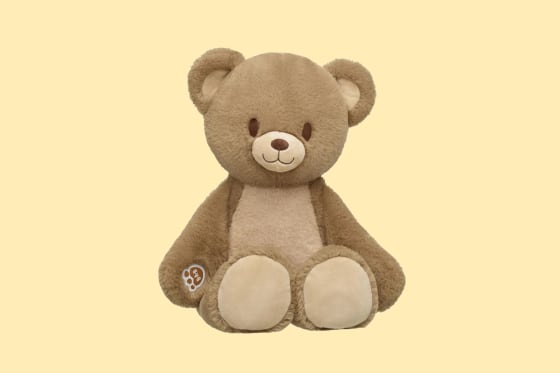
Roughly 36,000 Heartwarming Hugs Bears, a stuffed animal manufactured by Build-A-Bear, are being recalled due to a zipper detaching from the bear’s pouch.
Subscribe to read this story ad-free
Get unlimited access to ad-free articles and exclusive content.
On Thursday, the U.S. Consumer Product Safety Commission announced that the stuffed animals pose a serious risk of injury or death, as the detached zipper can present a choking hazard.
The recall number is 034464. The recall number can be found on the product label located on the back of one of the bear’s legs.
The bear includes a stuffed heart that fits inside a pocket. The heart-shaped insert is filled with 2.5 pounds of ceramic beads and can be used as a heating pad or chilled for cooling comfort.
“The product is graded 3 years+ and carries a cautionary statement advising adult supervision due to the heated/cooled element,” the release stated.
The bear was sold between January 2026 and March 2026 for about $48.
Customers are advised to immediately stop using the Heartwarming Hugs Bear. Consumers who purchased the bear should return it to the nearest Build-A-Bear store or request a shipping label at www.buildabear.com/recalls. Once returned, Build-A-Bear will issue a refund to the original form of payment or provide a gift card.
There have been no reported injuries, although one consumer in the United Kingdom reported the zipper detaching.
For information on the recall visit Build-A-Bear online at www.buildabear.com/recalls according to the release.