
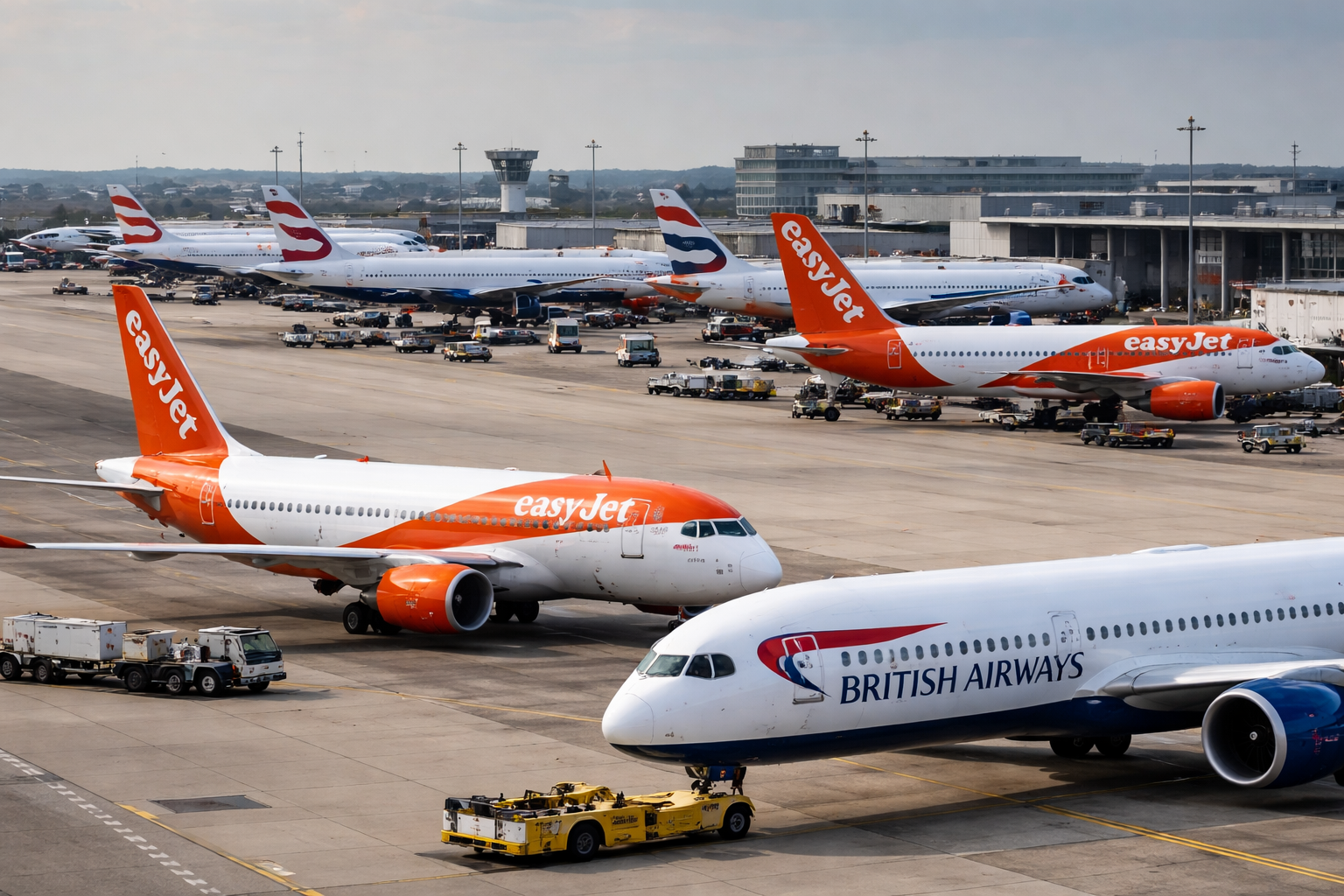
IAG and EasyJet share prices have slumped this month as geopolitical tensions continued, pushing crude oil above $100. EasyJet stock dropped to 397p, down by 25% from the highest point in December, and 30% from its 2025 highest point.
Similarly, IAG, the parent company of British Airways and Iberia, dropped to 374p, down sharply from the year-to-date high of 463p. These declines have led to a significant decline in their market capitalization.
IAG and EasyJet stock prices chart | Source: TradingView
Soaring jet oil prices to hurt margins
The ongoing EasyJet and IAG stocks plunge mirrors what is happening in the airline industry globally.
For example, the closely-watched US Global Jets ETF (JETS) has slumped to $25.2, down substantially from the year-to-date high of $31.
Top airlines, including Delta, United, Ryanair, and Southwest, have all plunged. This retreat is because of the ongoing Iran war and its impact on jet fuel prices, which have started to surge this year.
Data compiled by IATA shows that the average jet fuel price for the week ending on March 6 stood at $157 per barrel, a 65% increase from the previous month. European airlines like EasyJet and IAG are highly exposed as their average price is $164 a barrel.
Jet fuel prices chart | Source: IATA
The trend will likely continue rising in the near term as crude oil prices are at risk of going much higher in the near term. Brent, the global benchmark, jumped to $100 on Thursday. Similarly, the West Texas Intermediate (WTI) is nearing $100.
The price will continue rising because Iran believes that it is not in its interest to end the war soon. Instead, the country’s leadership believes that a longer war will prevent future attacks from the United States and Israel. In a statement on Wednesday, Iran warned that its goal is to push prices above $200.
Traditionally, airlines have always used hedging techniques to limit their losses in case of price surges. This time, however, even these airlines are using tactics like hiking fares and fuel surcharges as they grapple with an unprecedented jump in refining margins. In a recent note, Cathay Pacific’s CFO said:
“Our hedging is on crude oil rather than jet fuel. And therefore, while we do have some protection from that hedging, obviously, it’s not protecting against the jet fuel price in totality.”
IAG and EasyJet were diverging before the war
The most recent financial results showed that IAG and EasyJet’s businesses have diverged in the past few months. IAG’s numbers showed that its revenue rose by 3.5% to €33 billion last year, while its operational profit jumped to €5 billion. It also expanded its margins to 15.1%.
IAG’s business has done well because of its substantial market share in the transatlantic route and its focus on the premium segment, which has a higher margins. It has also continued to grow its routes and made huge orders from Airbus and Boeing.
On the other hand, EasyJet’s business was under pressure, which explains why the stock was in a downtrend before the war started. The recent trading statement showed that its group revenue rose by 11% to £2.2 billion. However, its higher costs led to its loss in the first quarter to £93 million.
Looking forward, EasyJet and IAG stock prices will remain under pressure as the war continues. The rebound will only happen when there are signs that the war is ending.
The post IAG and EasyJet shares sink as jet fuel surges: what next? appeared first on Invezz